Author: Bennette Paul D. Campano, PTRP, CPT-CES

If your shoulder hurts, most people immediately blame the rotator cuff. They start doing external rotations with a band and hope for the best.
But here’s the uncomfortable truth, you can have a strong rotator cuff and still have shoulder pain if your shoulder blade isn’t doing its job.
Your scapula is the foundation for shoulder movement. If that foundation is unstable, your shoulder joint takes the hit.
What Scapular Control Means (In Real Life)
Scapular control is your ability to:
Keep the shoulder blade stable when you press, pull, or carry
Rotate the scapula upward smoothly when you reach overhead
Avoid shrugging and dumping stress into your neck
Coordinate the scapula with the ribcage and upper back
When scapular control is poor, the rotator cuff often has to work overtime to keep the shoulder centered. That’s how you end up with “tightness,” pinching, clicking, and pain that keeps coming back.
Signs Your Scapula Might Be the Problem
You might notice:
Your shoulders shrug during pressing or pull-ups
You feel neck tension more than shoulder effort
Your shoulder blade wings or pops during movement
Your shoulder feels unstable or weak overhead
You get pain at the front/top of the shoulder with training
Why This Matters for Desk Workers Too
Even if you don’t lift, scapular control can degrade when you sit rounded for hours. Your upper back stiffens, your chest tightens, and your shoulder blade loses its ability to move and anchor properly.
Then you go to the gym, play sports, or even reach overhead at home, and your shoulder pays the price.
How Physiotherapy Can Help at Cristini Athletics Therapy
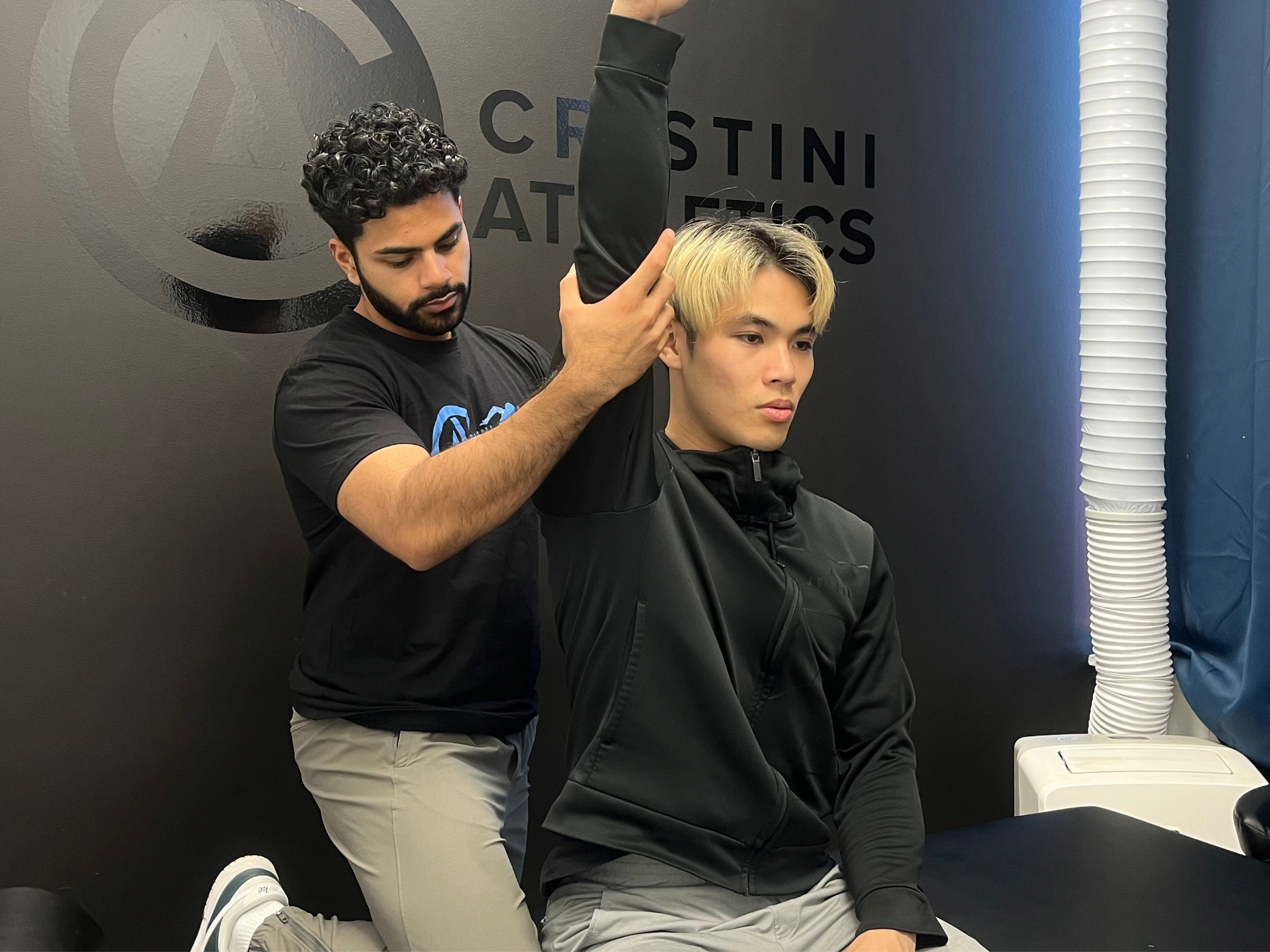
At Cristini Athletics Therapy, we teach scapular control in a way that carries over to real life and training. Not just “do these three exercises,” but a progression that rebuilds your shoulder’s foundation.
That can include movement retraining, strengthening progressions, and practical adjustments to your work and gym habits.
Article takeaways
Scapular control is the foundation for shoulder strength, if the shoulder blade doesn’t stabilize and rotate well, the rotator cuff gets overloaded and pain keeps returning. Signs like shrugging, neck tension, winging, clicking, and overhead weakness often point to a scapular problem more than a simple “tight shoulder.” Restoring scapular mechanics, improving upper back mobility, and rebuilding strength progressively is often the missing link, you can book in Woodbridge:
Benno is a physiotherapist registered in the Philippines (PTRP) and is now working in Canada as a trainer and Corrective Exercise Specialist (ISSA). He specializes in bridging rehab to performance, helping people go from post-op or persistent pain back to confident training, work, and sport. He’s passionate about helping clients move better, recover smarter, and reach their goals with a plan that’s practical, progressive, and individualized.